Published May 18, 2026
The Science of Damascena Rose Extract in Modern Skincare
A refined look at the molecular intelligence of Damascena rose skincare, where centuries of botanical heritage meet contemporary dermatological insight.
- damascena rose skincare
- rose extract
- botanical actives
- luxury skincare
- skin barrier
- antioxidants
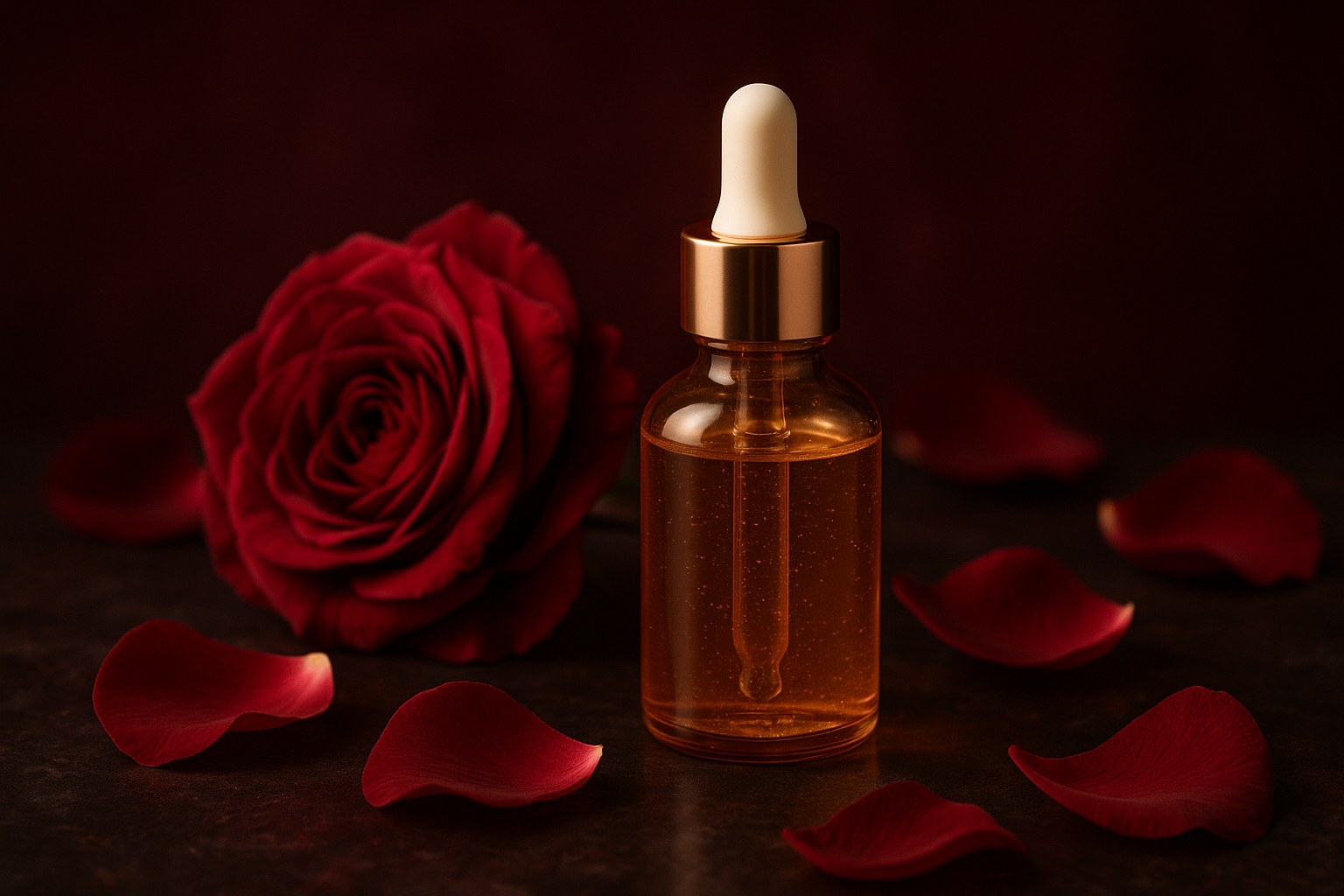
Few botanicals carry the cultural weight of Rosa damascena. Cultivated for over a millennium across the valleys of Isparta, Kazanlak and the Iranian highlands, it has perfumed empires and steadied apothecaries. Yet beyond its romance lies a remarkably sophisticated phytochemical profile — one that contemporary dermatological research is only beginning to fully decode. For the modern complexion, Damascena rose skincare is not nostalgia in a bottle; it is precision botany.
A Molecular Portrait of Damascena Rose
The Damask rose owes its efficacy to a constellation of bioactive compounds, each contributing a distinct functional signature. Steam distillation and supercritical CO2 extraction yield two principal fractions: the volatile essence (rose otto) and the hydrophilic waters and concretes that carry polar actives.
- Citronellol, geraniol and nerol — monoterpene alcohols responsible for the signature olfactive identity and demonstrated antimicrobial behaviour.
- Phenylethyl alcohol — a gentle aromatic with documented calming effects on cutaneous nerve endings.
- Flavonoids and anthocyanins — kaempferol, quercetin and cyanidin glycosides, all potent radical scavengers.
- Gallic and ellagic acids — phenolic acids with measurable inhibitory activity against tyrosinase and matrix metalloproteinases.
- Triterpenoids — supporting barrier lipid organisation and lending the extract its characteristic emollience.
It is this orchestration — rather than any single hero molecule — that defines the rose's dermatological intelligence.
How Damascena Rose Interacts With the Skin
1. Antioxidant defence at the cellular interface
Urban skin contends with a daily flux of reactive oxygen species generated by pollution, UV exposure and blue light. Polyphenols from Rosa damascena neutralise these radicals while upregulating endogenous antioxidant pathways such as Nrf2-mediated signalling. The result is less oxidative load on fibroblasts, and a measurable preservation of collagen architecture over time.
2. Soothing reactive and sensitised skin
Clinical interest has grown around the rose's anti-inflammatory potential. Phenylethyl alcohol and certain flavonoids appear to modulate the release of pro-inflammatory cytokines including IL-6 and TNF-α. For complexions prone to redness, post-procedural sensitivity or seasonal reactivity, this translates into a quieter, more even tone.
3. Reinforcing the moisture barrier
Rose extract contains natural sugars and polysaccharides that bind water at the surface, while its triterpenoid fraction supports the lamellar organisation of stratum corneum lipids. Together they reduce transepidermal water loss — a quiet but transformative effect, particularly in mature or climate-stressed skin.
4. Luminosity through gentle pigment regulation
Ellagic and gallic acids interfere with the rate-limiting step of melanogenesis. Unlike harsher depigmenting agents, the rose offers a more diplomatic approach, refining clarity without provoking irritation or rebound pigmentation.
The Damask rose does not impose itself upon the skin. It negotiates — restoring balance rather than forcing change.
From Field to Formulation
The efficacy of any rose-based formula begins long before the laboratory. Damascena petals must be harvested in the cool hours before sunrise, when essential oil concentration peaks. Within hours, they are processed — any delay diminishes the integrity of the volatile fraction. A single gram of rose otto requires several thousand blossoms, which is why authentic Damascena extracts remain among the most precious raw materials in cosmetic science.
Modern formulators pair these extracts with vehicles engineered for stability: encapsulated phenolics, low-oxygen processing, and chiral-preserving emulsion systems. The aim is to deliver the rose's full molecular spectrum to the skin without oxidation, dilution or sensory compromise.
Choosing a Damascena Rose Skincare Ritual
Not all rose products are created equally. When evaluating a formula, consider:
- Origin transparency — provenance from Isparta, the Rose Valley or comparable terroirs suggests genuine Rosa damascena, not lower-grade hybrids.
- Extraction method — CO2 and steam-distilled extracts retain a richer phytochemical profile than solvent-derived alternatives.
- Position in the ingredient list — meaningful concentrations appear within the upper third of the INCI list, not as a trace finishing note.
- Companion actives — peptides, niacinamide, squalane and ceramides complement rose extract beautifully, amplifying barrier and luminosity outcomes.
A Botanical With a Future
What distinguishes Damascena rose from passing skincare trends is its dual nature: it is at once heritage and frontier. Each new investigation — into its epigenetic influence on skin cells, its prebiotic interactions with the cutaneous microbiome, its potential in chronobiological formulation — reaffirms what perfumers and physicians have long suspected. The rose is not merely beautiful. It is biologically articulate.
At VE RED RAZ, we regard the Damask rose as a quiet collaborator — one whose intelligence shapes every formula we compose. To wear it is to step into a lineage of considered beauty, where science and sensorial pleasure are never at odds, but in conversation.