Published May 25, 2026
The Science of Damascena Rose Extract in Modern Skincare
A refined look at the molecular brilliance of Damascena rose skincare — where ancient botany meets evidence-led formulation.
- damascena rose skincare
- rose extract
- botanical actives
- luxury skincare
- cosmetic science
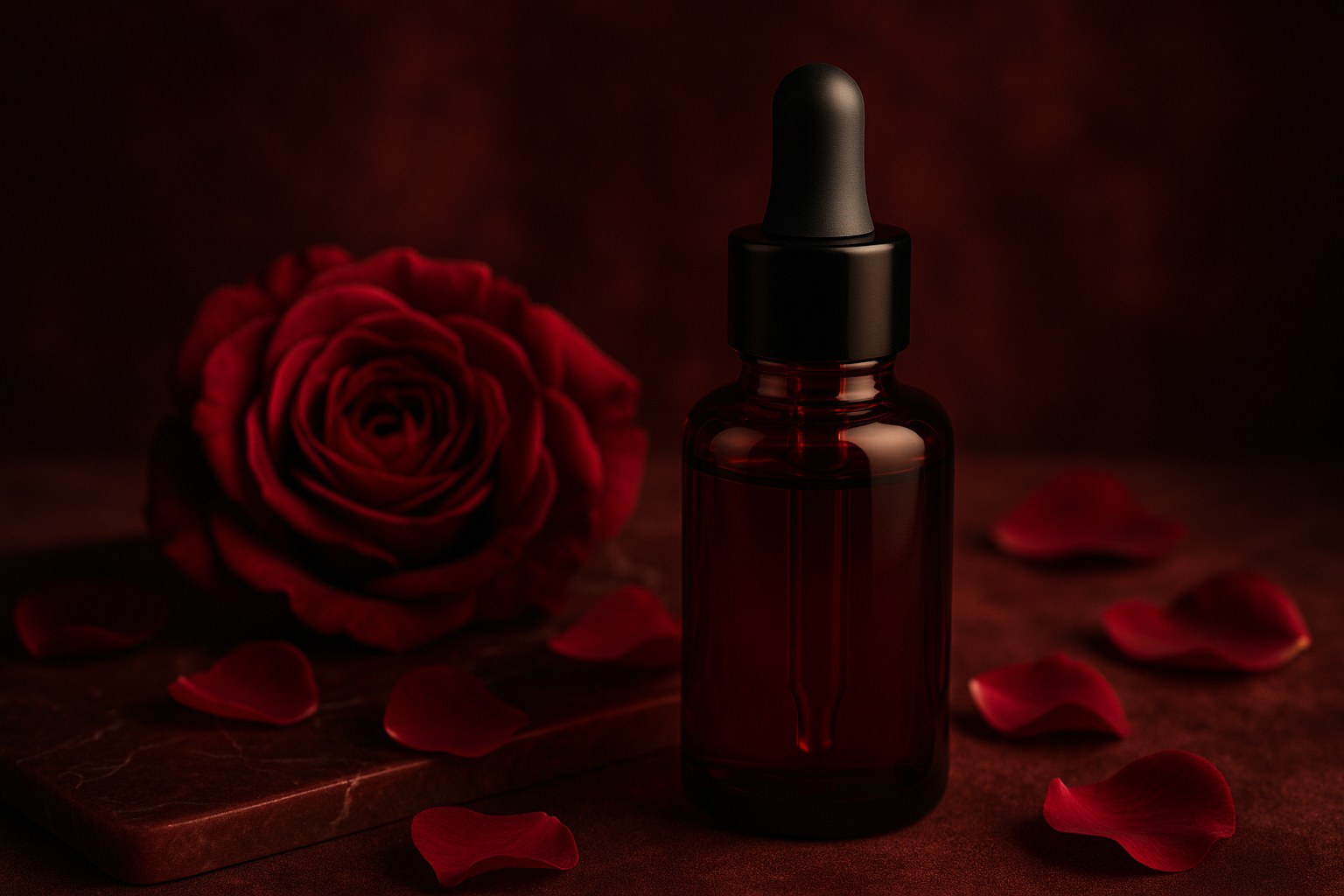
Few botanicals carry the cultural and chemical resonance of Rosa × damascena. Cultivated for centuries across the valleys of Isparta, Kazanlak and the southern foothills of the Atlas, the Damascena rose has long been revered as a sensorial treasure. Today, it is also one of the most rigorously studied botanicals in cosmetic science — a rare convergence of poetry and proof.
From Petal to Molecule: Understanding Damascena Rose Skincare
What elevates Damascena rose skincare beyond fragrance and folklore is the extraordinary complexity of its phytochemistry. A single petal contains more than 400 identified compounds, each contributing to the rose's biological signature on the skin.
Modern analytical techniques — gas chromatography, mass spectrometry and HPLC profiling — have allowed formulators to map the molecular architecture of the bloom with remarkable precision. Three families of actives stand out:
- Polyphenols and flavonoids, including quercetin, kaempferol and gallic acid derivatives, which deliver antioxidant capacity.
- Volatile terpenes such as citronellol, geraniol and nerol, responsible for the rose's signature olfactive fingerprint and its calming neurosensory effect.
- Anthocyanins and tannins, which contribute astringent and microcirculation-supporting properties.
Why Damascena, and Not Any Rose?
Botanically, the genus Rosa contains more than 150 species, yet only a handful are cosmetically relevant — and Damascena is the most studied. Its hybrid lineage (a cross of Rosa gallica and Rosa moschata, with traces of Rosa fedtschenkoana) yields a uniquely high concentration of beta-damascenone, the trace ketone that gives the rose its characteristic depth.
From a formulation perspective, Damascena offers something rarer still: balance. Its actives are powerful yet exceptionally well tolerated, making it suitable for sensitive, mature and reactive skin profiles where other botanicals may prove too aggressive.
The Harvest Window
The chemistry of the rose is fragile. Petals must be hand-picked in the cool hours before sunrise, when essential oil concentration is at its peak. Within hours, oxidation begins to alter the molecular profile. This is why provenance and processing speed are not romantic details — they are determinants of efficacy.
Mechanisms of Action on the Skin
Peer-reviewed dermatological research has explored several pathways through which Damascena rose extracts interact with cutaneous biology.
- Antioxidant defence. Rose polyphenols neutralise reactive oxygen species generated by UV exposure and urban pollutants, helping to preserve collagen integrity.
- Barrier reinforcement. Studies suggest that rose-derived compounds support filaggrin expression and lipid organisation in the stratum corneum, contributing to a more resilient barrier.
- Anti-inflammatory modulation. Geraniol and citronellol have demonstrated the ability to downregulate pro-inflammatory cytokines, soothing visible redness.
- Microbiome harmony. Emerging research indicates that gentle rose hydrosols may help maintain a balanced cutaneous flora without disrupting commensal species.
The Damascena rose is, in essence, a botanical adaptogen — calibrating rather than commanding the skin's response.
Extract, Absolute, Hydrosol: Knowing the Difference
Not all rose ingredients are equivalent. Each extraction method captures a distinct fraction of the petal's chemistry, and a thoughtfully built formula often layers several.
Essential Oil
Obtained through steam distillation, the essential oil is a concentrated lipophilic fraction rich in citronellol and geraniol. Used in micro-doses for olfactive signature and calming effect.
Absolute
Produced via solvent extraction, the absolute retains heavier aromatic molecules — including beta-damascenone — that distillation cannot capture. It offers the deepest, most velvety facet of the rose.
Hydrosol
The hydrophilic by-product of distillation, hydrosol contains water-soluble polyphenols and trace aromatic molecules. It is gentle, hydrating and ideal as a base for serums and mists.
CO₂ Supercritical Extract
A modern, solvent-free method that preserves the most complete molecular profile, often considered the gold standard for active skincare formulations.
The Sensorial Dimension
Science alone does not explain why rose endures in fine skincare. Olfactive neuroscience has shown that the inhalation of Damascena volatiles can modulate cortisol levels and activate parasympathetic response — a measurable shift toward calm. In this sense, a rose-infused ritual is never merely topical. It is a quiet act of nervous-system care.
Formulating with Integrity
For a rose-led formulation to honour both its heritage and its scientific potential, several principles must converge: traceable cultivation, low-impact extraction, stabilisation of fragile actives, and synergistic pairing with complementary molecules such as bakuchiol, niacinamide or hyaluronic acid. Concentration matters, but so does context — a well-built formula is an ecosystem, not a list.
At VE RED RAZ, the Damascena rose is not an ingredient among many. It is the axis around which every gesture, every texture and every molecule is composed — a single bloom rendered with the precision of contemporary science and the patience of an older art.